June 10, 2025
Uche O. Ajene
Energy is fundamental to our daily lives and like many critical resources, energy—which powers our homes, workplaces, and essential services—remains inequitably distributed. Energy justice, an emerging framework and social movement, seeks to address these disparities.
The Initiative for Energy Justice (IEJ) emerged in part by recognizing the need to clearly define and operationalize energy justice as both a framework and practice. Through research, community engagement and collaborative work with partners, we have developed foundational resources, including the Energy Justice Workbook which provide in-depth knowledge about this concept.
Welcome to the first installment of our Energy Justice 101 series, where we'll explore energy justice and why it matters to communities across America.
Defining Energy Justice
We define energy justice as “the goal of achieving equity in both the social and economic participation in the energy system, while also remediating social, economic, and health burdens on those historically harmed by the energy system ("frontline communities"). Energy justice explicitly centers the concerns of marginalized communities and aims to make energy more accessible, affordable, clean, and democratically managed for all communities. The practitioner and academic approaches to energy justice emphasize these process-related and distributive justice concerns."
Simply put, energy justice means ensuring everyone can access safe, affordable, and sustainable energy. However, this straightforward definition can be misleading about the concept's depth and importance. Today, the energy burden for low-income households is three times higher than for affluent ones, with some families spending up to 30% of their income on energy costs compared to the 3% spent by higher-income households.
Energy justice looks at how the benefits and burdens of energy systems are distributed across society. It asks critical questions: Who has reliable access to energy? Who is burdened by the environmental costs of energy production? Who participates in energy-related decision-making? How can we create energy systems that are equitable, inclusive, just, and sustainable?
The Historical Context of Energy Justice
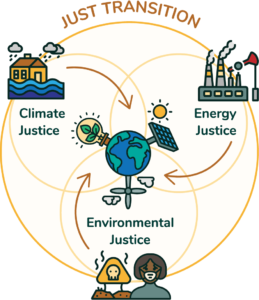
The energy justice framework evolved from earlier environmental and climate justice movements, creating a powerful lineage of justice-oriented approaches to resource governance and environmental protection.
 The environmental justice movement began in earnest in 1982 when residents of Warren County, North Carolina—a predominantly African-American community—protested the siting of a hazardous waste landfill in their neighborhood. Though unsuccessful in stopping the landfill, this protest sparked a national movement highlighting that communities of color and low-income populations disproportionately bear environmental burdens. Studies that followed, including a landmark report by the United Church of Christ in 1987, confirmed this pattern of "environmental racism" across the United States.
As the climate crisis gained recognition in the late 1990s, the climate justice movement emerged to address the global inequities of climate change impacts and responsibilities. Climate justice advocates pointed out that those least responsible for causing climate change—primarily Global South nations and marginalized communities—would suffer its worst consequences. This movement expanded upon environmental justice principles to include international dimensions and intergenerational equity concerns.
Energy justice represents the next evolution in this progression. Building on the foundations of environmental and climate justice, energy justice specifically examines how energy systems can either perpetuate or address social inequities. It recognizes that access to clean, affordable energy is a fundamental human right with overwhelming implications for health, economic opportunity, and social mobility.
Core Components of Energy Justice
Energy justice scholars and advocates recognize four key interconnected components:
- Energy Burden: The percentage of household income spent on energy costs disproportionately affects low-income households and communities of color.
- Energy Insecurity: The inability to adequately meet basic household energy needs, including heating, cooling, and lighting.
- Energy Poverty: Lack of access to modern energy services, including electricity and clean cooking facilities.
- Energy Democracy: The principle that communities should have a say in how their energy is produced, distributed, and used
Key Principles of Energy Justice
Energy justice scholars and advocates typically highlight four interconnected dimensions of justice as they apply to energy:
Distributive Justice
This form of justice focuses on how society shares energy benefits and burdens. Distributive justice concerns include:
- Whether all communities have access to affordable, reliable energy
- How the environmental impacts of energy production affect different populations
- Whether the economic opportunities created by energy systems are accessible to all
Spotlight: American Council for an Energy-Efficient Economy
A report by the American Council for an Energy-Efficient Economy (ACEEE) found that low-income households spend three times more on energy costs than non-low-income households, highlighting significant distributive injustice in our current system.
Procedural Justice
This dimension examines who participates in energy-related decision-making processes. Key questions include:
- Do affected communities have meaningful input into decisions about energy infrastructure?
- Is information about energy systems transparent and accessible?
- Are diverse perspectives and forms of knowledge valued in energy planning?
Spotlight: Soulardarity
In Michigan, Soulardarity, a community-based organization in Highland Park, has challenged the traditional utility model by advocating for community-owned solar street lights after DTE Energy removed over 1,000 streetlights to settle municipal debt. Their work has expanded into developing a comprehensive "Blueprint for Energy Democracy" that creates pathways for community participation in energy decisions, demonstrating how procedural justice can transform power dynamics and create more equitable outcomes.
Recognition Justice
This acknowledges that different communities have unique energy needs, vulnerabilities, and contributions. Recognition justice involves:
- Understanding how factors like race, income, geography, and disability shape energy experiences
- Respecting traditional and local knowledge about energy and environmental systems
- Recognizing historical patterns of marginalization in energy planning
Spotlight: Indigenous Environmental Network
When planning renewable energy projects on tribal lands, the Indigenous Environmental Network advocates for approaches that respect Indigenous sovereignty and incorporate traditional ecological knowledge. For example, the challenge facing the Navajo Nation was significant: after decades of coal dependency that provided jobs but caused environmental harm, how could they transition to clean energy while supporting their community? The solution came through recognition justice principles that resulted in solar projects aligned with local values and priorities.
Restorative Justice
This dimension focuses on repairing past harms and preventing future injustices. Elements include:
- Remediating environmental contamination from energy production
- Creating pathways for historically excluded communities to benefit from clean energy transitions
- Ensuring that new energy technologies don't reproduce existing inequities
Spotlight: Little Village Environmental Justice Organization
In Chicago, the Little Village Environmental Justice Organization (LVEJO) worked for over a decade to close two coal plants that had polluted their predominantly Latino neighborhood with toxic emissions. After successfully shutting down the plants, LVEJO has continued advocating for comprehensive site remediation of the contaminated land and the development of community-led clean energy projects on these sites.
Case Studies: Energy Justice in Practice
Energy justice is more than a theoretical framework, it's also a practical approach informing projects and policies nationwide:
Community Solar Initiatives
Minnesota's Cooperative Energy Futures (CEF) exemplifies how community solar can advance energy justice. This member-owned cooperative operates eight community solar gardens generating 6.9 megawatts across Minnesota. CEF specifically focuses on making solar power accessible to low-income and marginalized communities that cannot install solar panels. Their projects are expected to reduce utility bills for over 700 households over 25 years. By partnering with utilities like Xcel Energy, subscribers receive bill credits that lower their energy costs without requiring property ownership.
Weatherization Programs
The federal Weatherization Assistance Program (WAP) exemplifies how targeted energy efficiency initiatives can advance energy justice. Operating for over 40 years, WAP reduces energy costs for low-income households by increasing the energy efficiency of their homes while ensuring their health and safety. The program provides weatherization services to approximately 32,000 homes annually, with households saving an average of $372 or more each year on energy bills. Beyond financial savings, weatherization improvements result in healthier living environments through improved indoor air quality and reduced exposure to temperature extremes. Since its inception in 1976, WAP has helped improve the lives of more than 7.2 million families nationwide.
Utility Shutoff Protections
California has implemented some of the nation's most progressive utility shutoff protections, recognizing access to electricity and water as essential human needs. During the COVID-19 pandemic, the California Public Utilities Commission (CPUC) established a moratorium on disconnections for nonpayment and later created a $2 billion relief program to address utility debt. The Los Angeles Department of Water and Power voluntarily extended these protections, while permanent programs like California Alternate Rates for Energy (CARE) offer ongoing bill discounts for low-income households. These measures acknowledge that utility shutoffs disproportionately impact communities of color and low-income residents, making them critical energy justice mechanisms that protect vulnerable populations' fundamental right to energy services.
Green Workforce Development
Community Benefits Agreements (CBAs) have emerged as powerful tools for ensuring green workforce development in energy projects. For example, in Alabama, a landmark CBA with bus manufacturer New Flyer committed that 45% of new hires at their plants would come from groups with traditionally limited access to good manufacturing jobs. Well-designed CBAs can guarantee local hiring, living wage provisions, job training programs for residents, and career pathways in renewable energy. These legally binding agreements ensure that clean energy projects create meaningful economic opportunities for communities historically excluded from the benefits of energy development.
Energy Democracy Movements
The New York Energy Democracy Alliance (NYEDA) represents a powerful example of community advocacy for energy justice. Founded in 2014, this statewide coalition of community organizations, grassroots groups, and policy experts works to advance a just and participatory transition to a democratically controlled clean energy economy. NYEDA has successfully pushed for policy reforms, including creating the New York "Solar For All" program, which provides renewable energy free of charge to low-income households. Their advocacy has led to more accessible community solar by forcing policy changes that make solar energy financially viable for low-income communities. The alliance also campaigns for public power to replace corporate-owned utilities with publicly owned and democratically controlled alternatives that provide more affordable, reliable service while reinvesting profits into communities.
The Connection to Just Transition
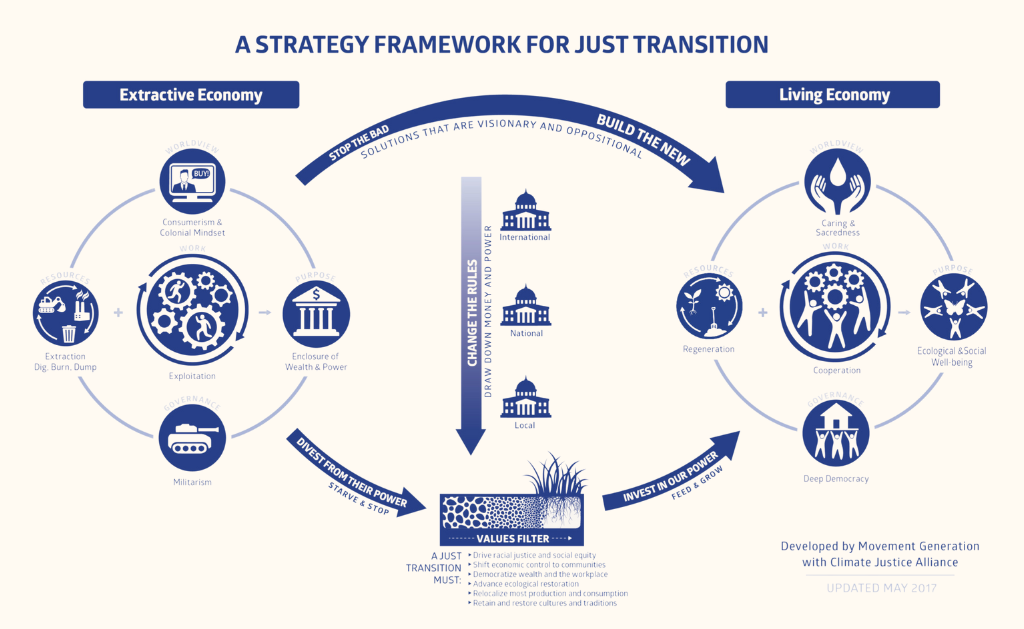
Energy justice is a crucial component of the broader just transition framework. The concept of just transition emerged in the 1980s through labor union movements advocating for worker protections during industrial changes. Today, it has evolved to encompass a comprehensive vision for shifting from an extractive economy based on fossil fuels to a regenerative economy based on sustainable, equitable principles.
As articulated by the Climate Justice Alliance, "Transition is inevitable. Justice is not." This powerful statement recognizes that while we must move away from fossil fuels, we must be intentional about ensuring this transition doesn't reproduce or deepen existing inequities. Just transition initiatives focus on transforming multiple systems simultaneously—moving from dirty energy to energy democracy, from industrial food systems to food sovereignty, from gentrification to community land rights, and from extractive development to ecosystem restoration.
The Movement Generation Just Transition Framework visually represents this shift, showing an extractive economy that depletes resources and concentrates power to a regenerative economy that restores ecological balance and distributes resources equitably. Within this framework, energy justice plays a vital role by ensuring that:
- Clean energy benefits are distributed equitably, with priority for frontline communities
- The costs of transition don't fall disproportionately on vulnerable populations
- Communities have a meaningful say in energy decisions affecting them
- Historical harms from the fossil fuel economy are remediated
By connecting energy justice to the broader just transition movement, advocates recognize that energy systems cannot be transformed in isolation. Energy justice must work with other justice movements to create comprehensive change that addresses the root causes of inequality while building resilient, sustainable alternatives.
Several converging factors make energy justice particularly relevant today:
Climate Change Urgency: As we work to decarbonize our energy systems, we face crucial choices about who will benefit from and who might be left behind in the clean energy transition.
Energy Inequities across the United States: From urban neighborhoods with aging infrastructure to rural communities lacking basic energy access, existing disparities demand attention.
Technological Transformation: Innovations like distributed solar, smart grids, and energy storage create new opportunities to democratize energy systems—but only if deployed with equity in mind.
Growing Climate Justice Movement: Communities have increasingly organized to address their disproportionate environmental burdens, with energy production often at the center of these concerns.
By understanding energy justice principles, we can work toward energy systems that are clean, efficient as well as fair, and inclusive. After all, the transition to sustainable energy is about creating a more just society.
In our next blog post, "Understanding Energy Burden: Why Some Communities Pay More," we'll explore one of the most significant energy justice issues: how energy costs disproportionately impact low-income households and communities of color. We'll examine the causes of high energy burden, its consequences for affected families, and promising approaches to address this challenge.