
June 12, 2025
Uche Ajene
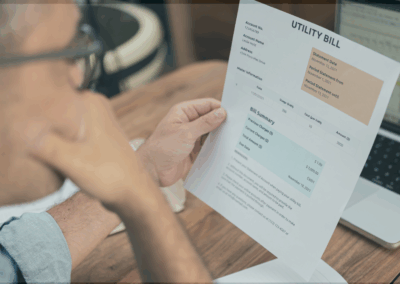
In early January, Darlene Jenkins took her power shutoff notice to the Fuel Fund of Maryland, a nonprofit organization that assists residents in navigating utility crises. The 54-year-old Baltimore resident who supported her disabled daughter and grandson on $800 monthly disability benefits, faced a $2,500 power shutoff—over a quarter of her annual income. Her crisis deepened when predatory energy retailers exploited her family, charging 64% more than standard rates. Living in energy-inefficient housing while spending over 20% of income on utilities, Jenkins exemplifies how energy burden traps low-income families in cycles of poverty, forcing impossible choices between keeping the lights on and basic necessities like food and healthcare.
Darlene's story illustrates the disproportionate financial burden that energy costs place on vulnerable communities, the energy burden. In 2020, nearly 34 million U.S. households reported reducing or forgoing food or medicine, or leaving their homes at unsafe temperatures, to pay their energy bills.
Welcome to the second installment of our Energy Justice 101 series. In our first blog post, we explored the foundational principles of energy justice. Today, we explore one of its most common manifestations: energy burden, and why some communities pay far more than others for their basic energy needs.
The Disparate Impact of Energy Burden
Energy burden measures the percentage of a household's gross income spent on energy bills, including electricity, heating, and cooling costs. According to the American Council for an Energy-Efficient Economy (ACEEE), a household is considered energy burdened when spending more than 6% of its income on energy costs, and severely burdened when spending more than 10%. The national average is around 3.1%, but this statistic masks deep inequities across demographics and regions, as some households may spend upwards of 30% of their income on energy costs.
The truth about energy burden is that it doesn't affect all communities equally. Research consistently shows disturbing patterns of inequality. 
According to ACEEE's recent analysis, compared to white households, Black households in the U.S. spend 43% more of their income on energy, Hispanic households 20% more, and Native American households a staggering 45% more, creating stark demographic disparities that persist across metropolitan areas nationwide.
Low-income households bear the heaviest burden, spending approximately three times more of their income on energy than non-low-income households. Older adults also face disproportionately high costs, with their median energy burden 36% higher than that of typical households and rural residents face energy burdens about 40% higher than their urban counterparts.
These disparities exist in every major U.S. city, though the severity varies. Cities like Birmingham, Alabama, Detroit, Michigan, and Riverside, California, have significantly higher percentages of energy-burdened residents than the national average.
Root Causes of Energy Burden Disparities
Why do these disparities exist? The reasons are deeply structural and historical.
Housing Discrimination and Infrastructure
Historical redlining and housing segregation pushed low-income communities and people of color into neighborhoods with older, less efficient housing stock. A 2021 study found that Black households bear a greater energy burden than others, unexplained by socio-economic inequality alone, with their extra burden driven primarily by higher heating needs.
Our research shows that communities facing energy inequities often have similar characteristics: they've experienced racial segregation, high unemployment rates, high poverty levels, and poor housing conditions – all stemming from systemic policies.
Many of these low-income households also live in older homes with inadequate insulation, inefficient appliances, and poor weatherization. These energy-inefficient dwellings can waste 20-30% of the energy consumed through air leaks, outdated systems, and inadequate insulation.
The Split Incentive Problem and Utility Rate Structures
Rental properties present another barrier. Landlords have no incentive to invest in energy efficiency improvements when tenants pay the utility bills – a challenge known as the "split incentive" problem. With lower homeownership rates in communities of color, this disproportionately affects these populations.
In many areas, utility rates are regressive, with fixed charges that make up a larger percentage of the bill for low-usage customers. Some utilities also charge higher rates in certain geographic regions without considering income disparities within those areas.
Energy Infrastructure Gaps
Many rural and low-income urban communities lack access to the newest, most efficient energy infrastructure. Some rural areas are isolated from large electrical systems and have unreliable energy supply or none at all. Other neighborhoods may lack the grid capacity to support residential solar installations.
Additionally, homeownership, good credit scores, and suitable roof space are often prerequisites for installing solar panels or participating in other renewable energy programs. These barriers exclude many households that could benefit most from reduced energy costs.
The Real Cost of High Energy Burden
High energy burdens extract costs that extend far beyond monthly utility bills, creating cascading effects that undermine health, economic stability, and social mobility.
When families can't afford adequate heating or cooling, they face increased risks of temperature-related illness or death. Indoor air quality issues, such as inadequate ventilation or the use of hazardous heating methods (like using ovens for heat), can trigger or exacerbate respiratory conditions. Multiple studies have established the links between energy insecurity and adverse outcomes in mental health, respiratory health, thermal stress, sleep quality, and child health. Children in energy-insecure households face greater odds of hospitalization and developmental concerns.
Many families face the “heat or eat” dilemma, and must choose between paying their utility bills and meeting other essential needs, such as food, medicine, or healthcare. In 2020, nearly 34 million US households facing a high energy burden reported reducing or forgoing necessary medical care to pay energy bills. Utility debt can lead to shutoffs, eviction, and homelessness. Once disconnected, families often face substantial reconnection fees and security deposits, creating a cycle of energy insecurity.
Case Study: Energy Burden in Urban Environmental Justice Communities
Environmental justice communities often face a double burden – they bear the brunt of pollution from energy production while simultaneously struggling with the highest energy costs. They may also suffer from higher energy bills, limited access to green spaces, and limited job opportunities associated with some urban neighborhoods. In contrast, the more affluent and historically white neighborhoods, there have been years of intentional investment in parks, green spaces, trees, transportation, and housing policies that provide cooling services.
“Asthma Alley” Mott Haven- South Bronx, New York City
Mott Haven is referred to as "Asthma Alley" because it has some of the worst air pollution levels in the US. Residents need asthma hospitalizations at five times the national average and at rates 21 times higher than other neighborhoods in NYC. The population is predominantly Hispanic or Black, comprising 97% of the total.
Three highways surround the community and five bridges intersect with it, with hundreds of daily trucks from the Cross-Bronx Expressway and the Hunts Point Distribution Center (15,000 daily truck trips). The South Bronx has nine waste transfer stations, accounting for almost one-third of NYC's total, yet only 6.5% of the city's population resides there. Mott Haven also suffers from disproportionately high incidences of obesity, diabetes, asthma, cardiovascular disease, mental illness, and other chronic health conditions, with residents more likely to experience higher morbidity and mortality compared to their white counterparts from middle-income or wealthier neighborhoods in New York City.
Approximately 39% of households in Community Districts 1 and 2 in the Bronx (which include Mott Haven) face high energy burdens, spending more than 6% of their income on electricity, gas, and heating fuels. The high energy costs stem from both the concentration of low-income households and the prevalence of outdated, energy-inefficient buildings and heating systems in the area. This energy burden is so severe that some families constantly experience the “heat or eat” dilemma. This economic strain compounds the health impacts of living in "Asthma Alley," where families already struggling with pollution-related respiratory illnesses must also sacrifice adequate heating and cooling, which are essential for managing asthma and other health conditions.
The proposed NY HEAT Act is a potential lifeline for environmental justice communities, such as Mott Haven, offering immediate relief from energy burdens through its proposed 6% income cap on utility bills. However, despite support from most of the state's utility companies and co-sponsorship by Bronx Assembly Members, the legislation appears to be stalled in the State Assembly. This means that families in Mott Haven will continue to face an impossible choice between paying for basic energy needs and other necessities while enduring disproportionate exposure to pollution.

Energy burden represents one of the most common manifestations of energy injustice in the United States today. Approximately one in every four low-income households has an average energy burden of 15 percent (the average for non-low-income households is 3 percent). When families like Darlene Jenkins' and families in Mott Haven are forced to choose between heating their homes and buying medicine, our energy system is failing its most basic test of fairness. This disparity isn't an accident; it's the predictable result of decades of discriminatory policies, underinvestment in disadvantaged communities, and energy systems designed without equity in mind.
The households that are least able to afford the upfront costs of home energy upgrades are those that most need utility bill savings, so bringing low- or no-cost efficiency improvements to them is key to reducing their burdens.
Overcoming the energy burden issues some communities face requires a sustained commitment: addressing the split-incentive problems that trap renters in inefficient housing, ensuring that clean energy deployment prioritizes the communities that need it most, and recognizing that energy affordability is not a luxury but a basic necessity.
In our next installment, we'll explore the history of energy inequity in America. We'll examine how redlining, discriminatory lending practices, and deliberate infrastructure investment decisions created the foundation for today's energy injustices, revealing that the patterns we see in communities like Mott Haven