Plug-In Solar: Expanding Energy Access Beyond the Rooftop
March 16, 2026
The solar industry remains steady in 2026, and new markets and technologies are emerging. Despite significant federal policy reversals in 2025, the solar market proved remarkably resilient, accounting for58% of all new electricity-generating capacitythrough the third quarter. This market strength demonstrates sustained demand for affordable, clean energy that transcends political headwinds and provides stability during geopolitical upheaval.
Of course, the full impact of recent federal rollbacks has yet to be felt. Theresidential solar tax credit (Section 25D)expired on December 31, 2025, whilecommercial and utility tax credits (Section 48E)face accelerated deadlines through 2027. The termination of theSolar for All programhas removed critical support for low-income communities, and administrative barriers from federal agencies have compounded permitting delays. Billions of dollars in federal funding for solar deployment have been paused or eliminated, an investment gap that states and philanthropy cannot replace on their own.
Yet states are stepping into the leadership void, driving policy innovation at the state and local level with particular focus on populations historically excluded from the clean energy transition. Emerging technologies and regulatory frameworks offer new pathways for solar market growth, even as traditional incentive structures erode. Here’s where plug-in solar comes in.
The Plug-In Solar Opportunity
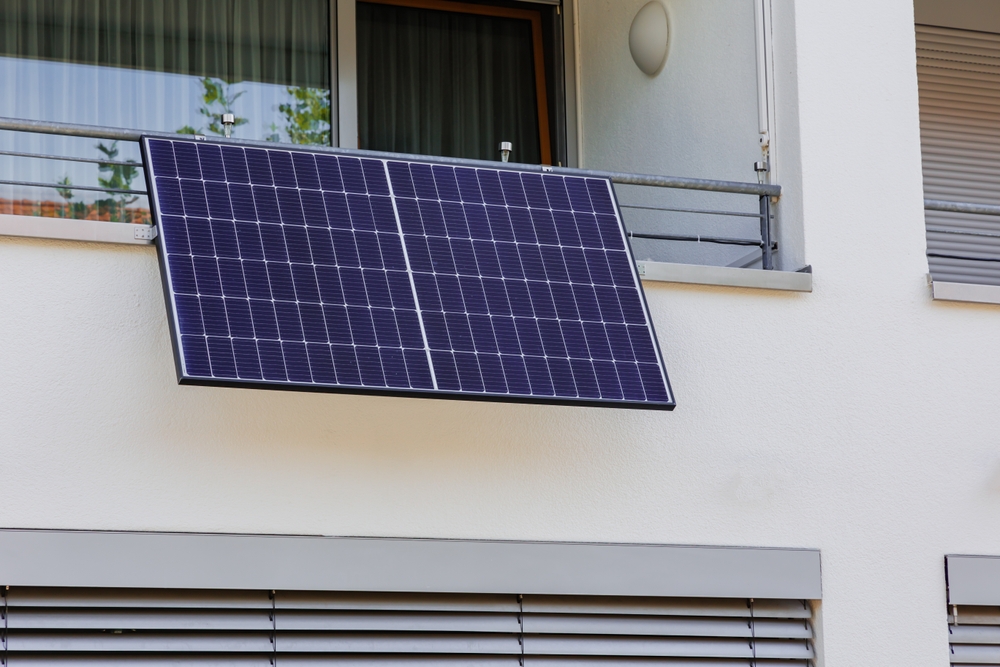
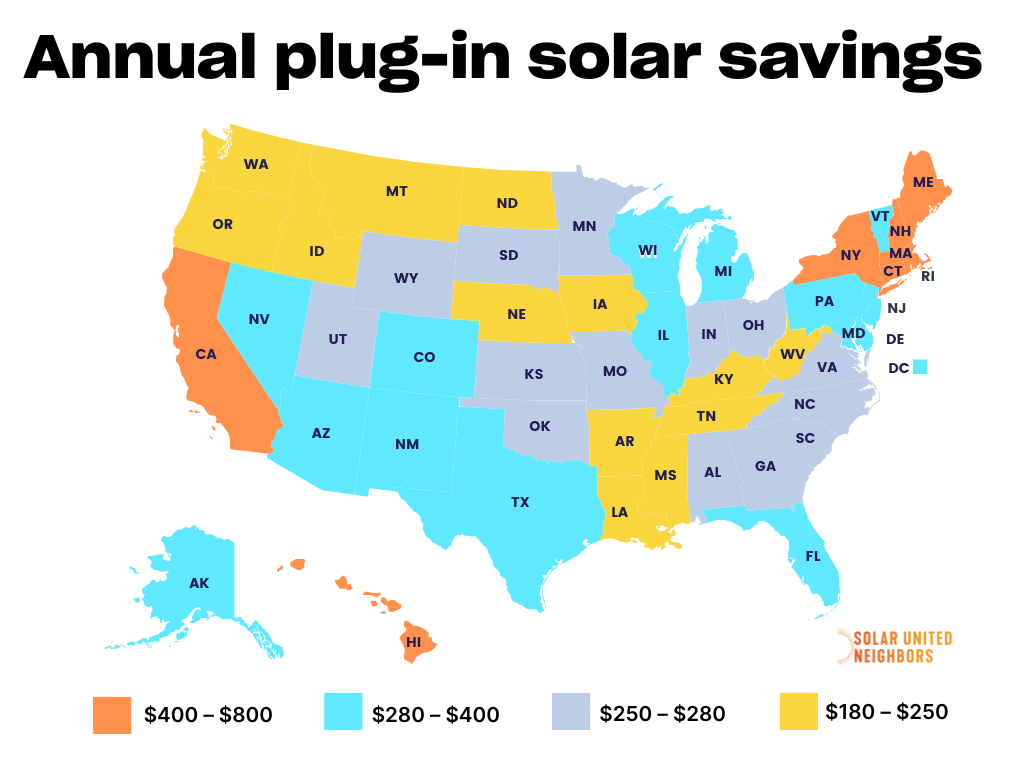
Plug-in solar, also called balcony solar, represents a significant shift in who can access solar energy. These factory-assembled systems (typically 400-1,200W) are designed to plug directly into standard electrical outlets through code-compliant connections. The technology has proven itself in Europe, whereGermany alone has deployed over 4 million units. For households in the U.S., these systems can reduce electricity consumption by up to 20%, translating to about$350 in annual savings. Solar United Neighbors developed astate-by-state savings mapshowing estimated annual savings ranging from $180 to $800 for a 1,200W plug-in solar system. 1
1 Estimates based on 2025 EIA state electricity rates and Bright Saver cost projections, $1.50/W. Savings vary by state due to local electricity rates and solar resources.
The certified (systems that meet UL 3700 standards) plug-in solar model also challenges traditional barriers to solar adoption: high upfront costs ($1,000-2,000 for certified systems versus $20,000+ for rooftop installations), homeownership requirements, credit checks, and permanent residence. Renters, apartment dwellers, and residents in mobile or manufactured homes can gain access to solar generation for the first time outside of rooftop or community solar programs.
How Plug-In Solar Works
How It Works: Step-by-Step
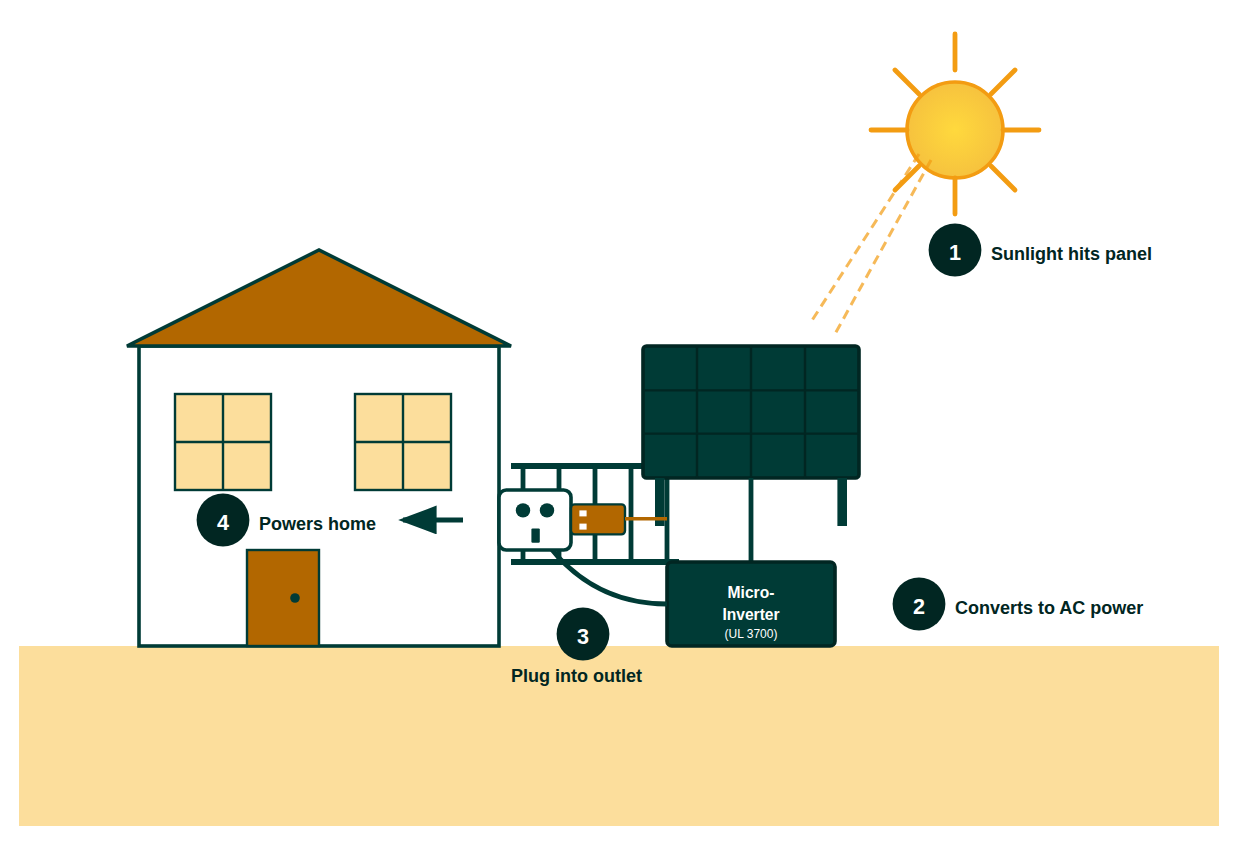
(1) Solar Panel Absorbs Sunlight:
Compact panel (400-1,200W) mounted on a balcony or window captures solar energy.
(2) Microinverter Converts Power:
The solar panel produces DC power that flows directly to the built-in microinverter, which converts it to AC power – the standard type of electricity used in homes and compatible with all household appliances.
(3) Simple, Code-Compliant Connection:
The system plugs into a standard outlet using a code-compliant connection. Certified systems (UL 3700) include built-in safety features like anti-islanding protection, which automatically shuts the system down if grid power fails-protecting utility workers and your home.
(4) Powers Home via Grid-Tie Technology:
The microinverter’s grid-synchronization technology ensures solar power flows into your home’s circuit first, automatically reducing what your meter pulls from the grid. This “self-consumption” requires no special configuration – it happens the moment you plug in.
Safety Considerations and Standards
As with any electrical system, plug-in solar installations require attention to several safety considerations:
- Electrical circuit capacity: Ensuring the outlet circuit can handle additional load without overloading
- Proper grounding: Maintaining adequate grounding to prevent shock hazards
- Weather exposure: Protecting outdoor connections from moisture and environmental damage
- Backfeed risks: Preventing electricity from flowing back into the grid during outages, which can endanger utility workers
- Fire hazards: Avoiding improper connections or overloaded circuits that could create fire risks
- Building codes: Compliance with local electrical codes and regulations
To address these concerns, the industry developed comprehensive safety standards this year. UL Solutions launched theUL 3700 certification programspecifically for plug-in solar equipment, establishing rigorous testing protocols for inverters that transfer DC power for AC power use, electrical components, and system integration. Certified systems incorporate critical safety features, including rapid shutdown when disconnected, anti-islanding protection to prevent backfeed during grid outages, ground-fault protection, and overcurrent protection. These integrated safety mechanisms significantly reduce the electrical hazards associated with connecting solar generation to home circuits. State legislation legalizing plug-in solar specifically references systems meeting UL 3700 or equivalent standards, ensuring that legal installations meet established safety benchmarks. For state policymakers and technical stakeholders seeking additional detail on safety considerations, system configurations, and regulatory frameworks, the Clean Energy States Alliancewhite paperprovides guidance on deeper policy questions, including breaker masking, bidirectional ground fault circuit interrupter (GFCI) requirements, and international regulatory approaches.
Plug-in or balcony solar systems differ from portable or DIY solar kits in their design and intended use. Balcony solar systems are complete, factory-integrated units designed specifically for grid connection through standard outlets, with all components tested together for safety and compatibility. Portable solar generators are intended for off-grid use, such as camping and emergency backup, while DIY kits can involve assembling separate components (panels, inverters, cables, and connectors) from various manufacturers, creating potential safety risks from component mismatches and a lack of integrated testing.
State-Level Policies
Utah became the first state to legalize certified plug-in solar systemlast year, unanimously passing legislation and demonstrating that support for affordable, clean energy can transcend partisan divisions. New England states are currently considering similar policies:Vermont has pending legislationfocused on low-income residents and renters.New Hampshire introduced parallel legislationin January 2026, and Maine is developing similar measures.
California introducedSB 868, the “Plug Into the Sun Act,” in January 2026. The bill eliminates interconnection requirements and utility fees for certified plug-in systems, making solar more affordable for the 44% of California households who rent. The legislation explicitly references UL 3700 certification to ensure safety standards. Industry projections suggest that if California and several other states pass enabling legislation, increased manufacturing scale could drive system prices down to approximately$0.50 per watt (around $600 for a 1.2kW system)within two years as the market expands.
Bright Saverhas developed model legislation emphasizing safety certification requirements and maintains a tracker of the status ofadditional statesdeveloping similar safeguards and opportunities (explore theinteractive map).
Plug-in solar technology can address several persistent equity gaps in clean energy access. With this technology, renters gain direct solar access without landlord approval or building modifications. Low-income households face lower upfront costs and no financing barriers. Apartment dwellers are no longer categorically excluded from solar generation. Mobile and manufactured home populations can relocate their systems without forfeiting their investment.
The safety certification framework is itself an equity issue. Proper safety standards protect renters and low-income households who may face disproportionate consequences from electrical hazards, code violations, or insurance disputes. State legislation that requires certification while reducing regulatory barriers creates a pathway to safe, accessible solar deployment.
However, challenges remain in this space. Broader state adoption is necessary to achieve scale. Utilities have expressed resistance to reduced revenue from grid electricity sales. Public education on both the benefits and safety requirements of certified systems requires investment. Building codes need harmonization across jurisdictions to provide regulatory clarity.
A New Chapter for Distributed Solar
The rapid state-level interest in plug-in solar legislation demonstrates that states are willing to lead on energy access when federal policy retreats. While state resources cannot replace the billions in federal solar funding that have been cut or frozen, emerging regulatory frameworks and technologies offer new avenues for market growth and access to solar energy. Plug-in solar systems provide a practical pathway to expand solar adoption among populations that have been systematically excluded from the clean energy transition. As more states establish clear regulatory frameworks with appropriate safety standards, the combination of legal clarity, certified equipment, and manufacturing scale could make distributed solar generation accessible to millions of households currently unable to participate in rooftop or community solar programs.
The technology offers another measure of hope for the U.S. solar market as it navigates an uncertain federal landscape. State leadership on plug-in solar access represents not merely a defensive response to federal rollbacks, but an opportunity to reimagine who can participate in and benefit from distributed clean energy generation.