What the 2026 Midterms Mean for Energy Justice

By Alison Coffey
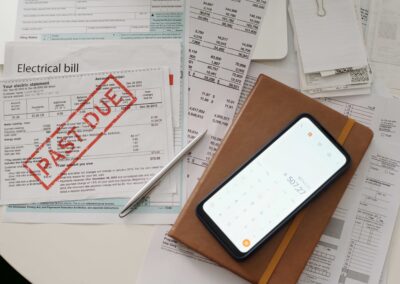
In last week’s historic election, voters overwhelmingly rewarded candidates who focused on the cost of living and corruption. Spiking fuel prices, rising bills, data centers and a growing frustration with money in politics led to sweeping changes in federal and state level races across the country.
Election outcomes across the country reveal growing momentum to address unaffordable energy costs, as well as new opportunities for advancing energy justice:
Energy affordability & clean energy in the next Congress
Voters delivered a resounding message that they want to rein in household energy bills and promote more clean energy. An enormous blue wave brought the largest Democratic majorities in both the Senate and House that we’ve had in fifteen years. This included major wins in Republican strongholds like Texas, Kansas, and South Carolina, where Democrats have not held statewide office in decades.
With the Trump administration still in office, it’s yet to be seen how much will be done to restore climate and clean energy funding, environmental justice protections and staffing for key agencies. Yet Congress has renewed opportunities to increase vital funding to the Low-Income Home Energy Assistance Program (LIHEAP) and Weatherization Assistance Program, restore or establish new energy efficiency tax credits, and propose additional energy affordability legislation to provide relief for American families.
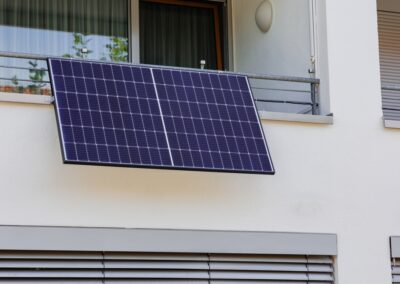
Six states have Democratic trifectas, controlling both chambers of the legislature and the Governorship. Democrats also now control the majority of legislative houses in the country. This creates new opportunities to drive forward energy efficiency and renewable energy investment that can benefit communities in both the short and long term. Policies that require energy efficient appliances and buildings, and spur investments in distributed energy like solar, batteries, and virtual power plants are all now more likely to move in many states.
Data center moratoria & protections
Data centers emerged as a major flashpoint in this year’s election and voters made clear they want strong protections against negative impacts in their communities. According to a CBS exit poll, more than half of voters considered data centers to be a “crucial” or “major factor” shaping their vote for Congress.
The midterms saw at least 41 local ballot initiatives on data centers across 13 states. Of these measures, all but one went against the data center industry by approving new local restrictions or blocking pro-development measures.
Data centers were also prominent in state-level races, with several gubernatorial candidates who campaigned on moratoria or pauses now poised to take office.
In Texas, a remarkable blue flip brings populist Democrat Gina Hinojosa to replace Governor Greg Abbott. Texas is projected to surpass Virginia as the country’s largest data center market by 2030, and a recent investigation showed Abbott’s pause on permitting did not stop projects from moving forward. In response, Hinojosa has promised a freeze on electric rates and an immediate moratorium on data centers until the legislature can establish adequate protections for Texas communities.
In Ohio, Governor-elect Amy Acton has proposed a conditional moratorium to ensure data centers meet a series of transparency, labor, and environmental requirements. Likewise in Michigan, gubernatorial winner Jocelyn Benson has called for a statewide moratorium until stronger regulations are in place. In Georgia, another major data center market, incoming governor Keisha Lance Bottoms has promised to sign an executive order instituting a pause on data center development and to review state tax incentives currently in place that promote data center development.
Several states are now seeing new alignment for protections across the state and local levels. In states where governors are willing to use executive powers to shape permitting, tax incentives, and moratoria, and where local ballot initiatives can impose restrictions or conditions on development, communities may find additional opportunities to slow the data center boom. Yet, organizing to hold electeds accountable and stem the massive influence of the tech and data center industry remains crucial to protect communities, especially those in less favorable regulatory contexts.
Reining in corporate utility power
Recent years have seen growing awareness and frustration with corporate utilities bringing in record profits while imposing burdensome rate hikes on households. Only ten states elect for their public service commissions – the entities responsible for regulating investor-owned utilities, setting electricity and gas rates, and approving the sources of new power generation – and in forty states, those commissioners are appointed. Two of the nine PSC elections held this year saw important wins for candidates focused on lowering residential electric bills, promoting clean energy, and holding corporate utilities accountable.
In Georgia, voters secured Democratic control of the PSC for the first time in 20 years, re-electing Commissioner Peter Hubbard and electing first-time Commissioner Sheila Edwards. This built on an important PSC win in 2025, when two Democratic challengers who campaigned against rising utility prices and corporate greed unseated incumbents on the republican-held commission for the first time in decades. Democrats now hold a 3-2 majority, opening new opportunities for Georgia to lower energy bills, promote renewable energy, and hold Georgia Power accountable.
In Arizona, two Democratic challengers, Jonathon Hill and Clara Pratte, won seats on the Arizona Corporation Commission. Earlier in the year, the fully-Republican commission did away with renewable energy requirements for utilities as well as energy efficiency standards that help households save on their energy bills. Hill and Pratte both ran on lowering utility bills and investing in renewable energy.
Michigan voters also came out in support of greater utility accountability with the passage of Proposal 2, known as the Michiganders for Money out of Politics Proposal. Passing with more than 81% of the vote, Proposal 2 will prohibit political campaign contributions from utility-funded PACs, as well as utility executives, board members, and lobbyists.
At a time when corporate utilities are requesting record rate increases, bringing in record profits, and pouring record money into political campaigns – these outcomes reveal the mounting frustration voters have with the runaway power of corporate utilities.
What comes next
These results reflect important currents and struggles building in recent years: the emergence of household energy costs as an issue of broad concern, growing anger with the power of big tech and corporate utilities, and the need for affordability solutions that will deliver real benefits to the working class.
New elected officials now face an important test: delivering on their affordability promises. This is where the energy justice movement has a key role to play, articulating and advancing innovative policy and regulatory solutions that integrate clean energy, curtail the power of corporate utilities, and keep utility costs affordable for everyday people.
The prominence of energy justice issues in this election also reveals an opening to bring more groups and coalitions into the energy justice movement. We can’t slow down on movement building, envisioning alternatives, and demanding accountability.