A Conversation with IEJ's Founders
Reflecting on seven years of shaping the field of energy justice
By Subin DeVar
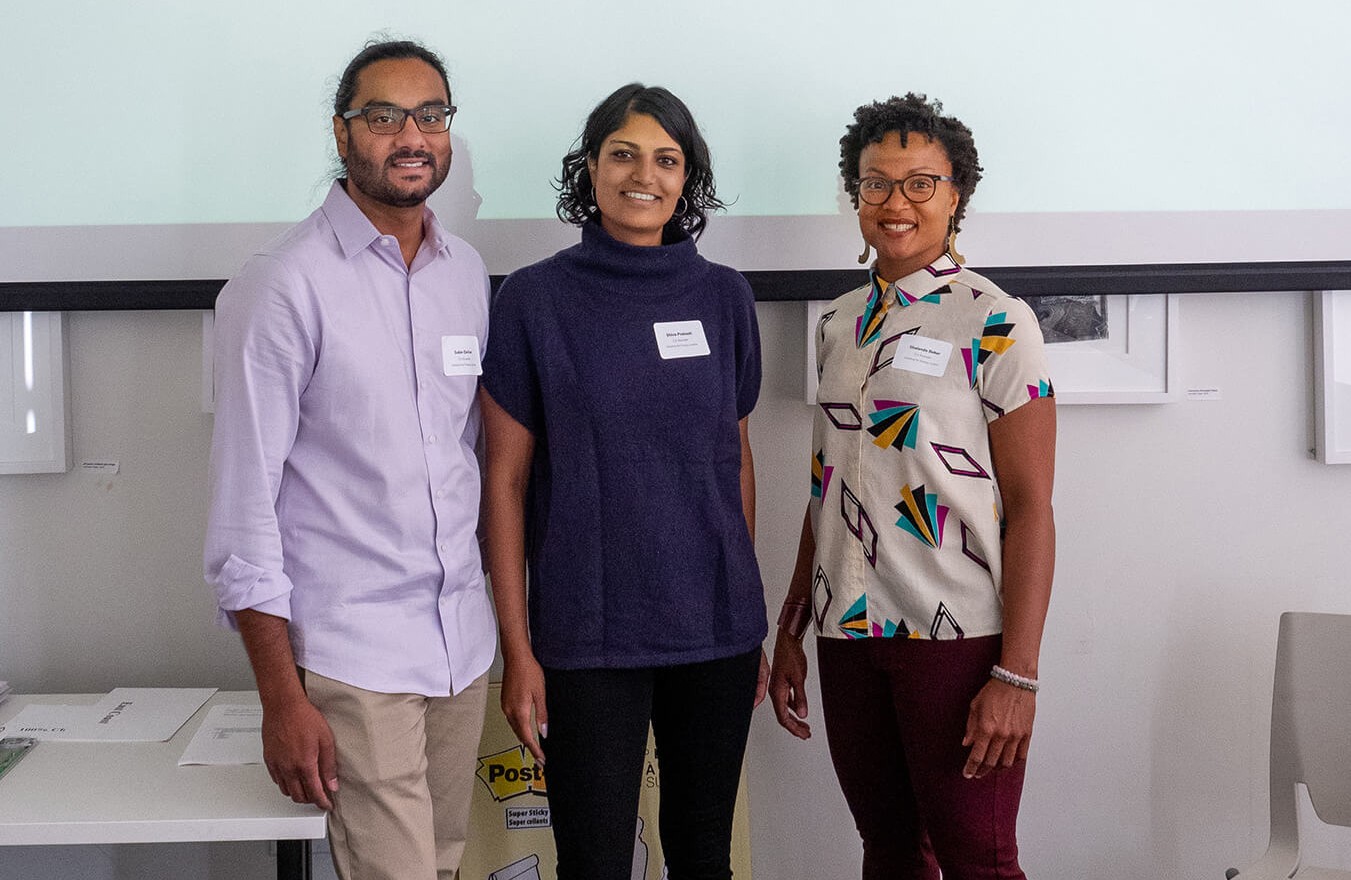
Shalanda Baker, Shiva Prakash, and I recently sat down to reflect on the seven years since we founded the Initiative for Energy Justice. We started as three advocates working in three different states, and it was striking to trace how far the work has come, and how much of what drove us at the beginning still holds true.
Recognizing a critical gap
Shalanda and I first met in California in 2016, at a foundation gathering for its grantees. Comparing notes, we realized something: various organizations were talking about the idea of "equitable renewable energy," but there wasn't a coherent understanding of what it meant. To some, it meant ensuring that everyone receives the health benefits from clean energy while to others it meant that communities harmed by fossil fuel extraction would find jobs in solar and wind. To many, it was a vision with no tangible policy ideas. A year later, once Shiva joined us on a call, we realized we were each watching the same thing unfold in different places.
Shalanda: "We were each witnessing this rapidly evolving energy policy landscape, but there wasn't adequate community voice or even a way to translate community expertise into regulatory language."
At the time, I was in California, Shalanda was in Hawaii, and Shiva was in New York. Three states moving fast on the energy transition, but all falling short in lifting up the perspectives and solutions of underserved communities. Process barriers existed that made it difficult for working families to participate meaningfully in regulatory proceedings, and renewable energy incentives and programs often overlooked accessibility barriers like access to capital or being a renter rather than a homeowner.
Shiva: "In each state, the justice and equity voice was always up against well-resourced clean energy and solar industry groups. There was usually just one voice in the room for the equity angle. We asked: what data, evidence, model rules, or frameworks could amplify that voice and help it succeed?"
Strategic choices and early work
We could have taken several different paths as an organization. Early on, we debated whether to be a fee-for-service shop offering direct legal help or to take a broader thought-leadership role.
Shalanda: “We ended up in the middle – doing some targeted state work where we could learn lessons that might be broadly applied, while also developing frameworks that could transform the conversation.”
That strategy informed our first and most foundational resource: the Energy Justice Workbook.
Shalanda: "It seems simple now, because it's in so many people's lexicon. But that framework was powerful. I've seen it referenced in Europe and elsewhere."
Our deeper aim was to break out of the narrow terms that regulatory proceedings allow.
Shalanda: "Instead of communities fighting to eke out minimal benefits from a proceeding, we asked: what could community-owned power look like? What does a wholesale transformation of the energy system look like?”
For me, this is where the idea of "operationalizing" equity came in. How do you take a big movement vision of a just transition and help other people, like energy regulators, who don't yet know what it means or how to get there? You break it down, with frameworks, scorecards, and models. When we scan for it now, the Workbook, the definition, and the scorecard show up across curricula and websites. It really did change the field.
Seeing our impact
When asked what surprised her most since IEJ started, Shalanda reflected on her time at the U.S. Department of Energy, where she led national energy equity work.
Shalanda: "Day two or three, I'm in a meeting and someone's presenting slides with a screenshot of our Workbook, the Venn diagram of the three dimensions of energy justice. I thought, okay, this is the go-to."
Looking back at what made that possible, I recalled how unique it was that we had relationships and credibility across both academia and the movement. If we hadn't gone through that effort of both engaging in rigorous research and having conversations with leaders in the field, I don’t think the Workbook would have landed the same way.
Reflecting on what she was most proud of, Shiva named the geographic diversity of the research and resources IEJ has produced.
Shiva: “When we began, we were all pretty locally focused. But the team has made a real effort to diversify across different regions and states. It's not just the places you'd automatically think of as being at the vanguard of this work, but also places that could easily get left behind.”
The road ahead
We ended our conversation looking forward and discussed the role IEJ will continue to play. We aligned on how our thought leadership, and thinking more transformatively than the mainstream, could meet the current moment with energy affordability and data centers dominating public discourse.
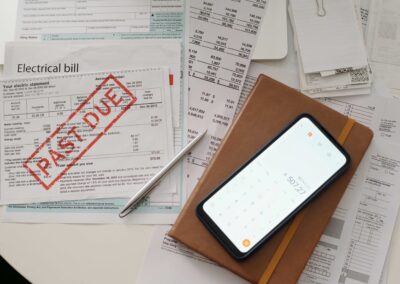
I expressed my concern that we're having this affordability conversation as a country but not acknowledging that it’s not the same for everyone: some households are truly struggling with bills in a way that puts their health and lives at risk. IEJ shows the data on who is actually hurt by high electric bills, and provides recommendations spanning immediate relief, equitable clean energy, and long-term structural reform of utility incentives.
Shalanda envisions us taking that further, convening others and designing what a ten-year strategy looks like. Science shows us that bold action is needed in this next decade for clean energy, in order to avert the worst impacts of the climate crisis and to meet growing energy needs.
Shalanda: “We know this decade until about 2035 is the decade of true action, and there are multiple forks in the road. Being laser-focused on the north star of what justice looks like in 10 years and then mapping out a strategy to get there – that would highlight the urgency of the moment.”
Shiva: “While the current landscape poses significant challenges, there's an interesting opportunity to highlight that energy is fundamental; it shouldn't be a partisan issue. With heightened conversation around affordability and people's inability to get by in basic ways, plus issues around resiliency touching everyone, IEJ can stake out a space as a thought leader in a way that speaks across all constituencies. Speaking to these fundamental questions and issues is a great opportunity and could be deeply meaningful.”