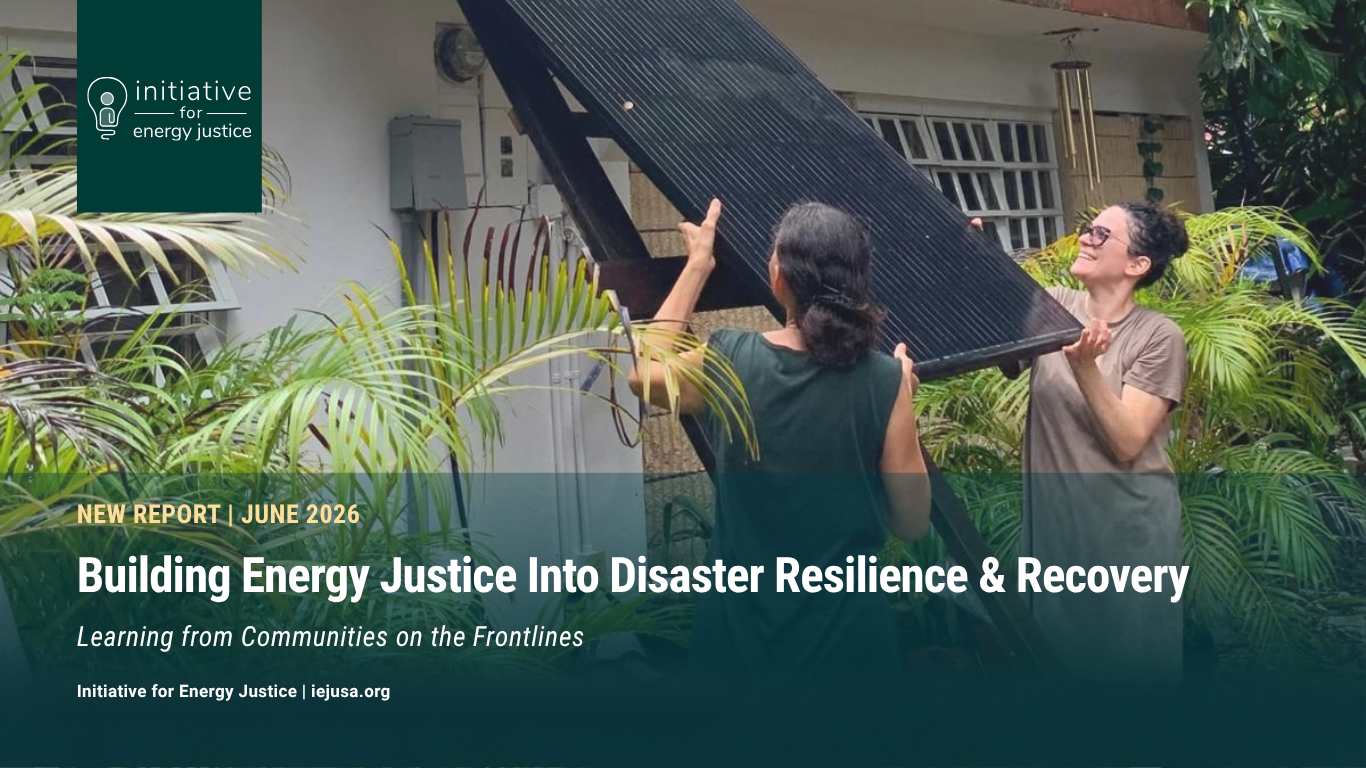
Building Energy Justice into Disaster Resilience & Recovery
As global warming makes extreme weather events more frequent and severe, and as our grid infrastructure ages, communities are increasingly affected by climate disasters and prolonged electric outages. Access to resilient, reliable, renewable energy is a critical part of a community’s ability to prepare for, respond to, and recover from these disasters. As the current federal administration rolls back support for clean energy and disaster relief, state, local, and community-led efforts to build resilient energy ecosystems are more important than ever. Crucially, disaster resilience and recovery must be just and equitable: these processes must prioritize, involve, and benefit low-income people, communities of color, tribal communities, and groups historically harmed by extractive energy systems.
This report offers a framework for an energy justice approach to disaster resilience and recovery. Mapping resilient community energy infrastructure across three scales – small and mobile infrastructure, place-based infrastructure, and institutional infrastructure – it aims to help community stakeholders identify entry points, assess what infrastructure is within reach, consider opportunities in different institutional contexts, and think about collaborations that can strengthen work across the ecosystem. Five case studies from California, Texas, North Carolina, and Puerto Rico show how communities are integrating resilient, renewable energy into local disaster preparation and recovery on the ground.
If you are interested in learning more about IEJ’s work and resources, please reach out.